
1 Introductory Statement
1.1 This Accessibility Plan (Plan) has been drawn up in consultation with the staff and pupils at the Academy including the SENDCo and covers the period from September 2026 – September 2029. The plan is available in large print or other accessible format if required.
1.2 The plan takes account of the Academy’s public sector equality duty set out in section 149 of the Equality Act 2010 – Schedule 10 of the Equality Act 2010 places specific duties on schools in relation to disabled pupils, requiring them to plan proactively to improve access to the curriculum, the physical environment and information. These duties support schools in meeting their wider responsibilities under Section 149 (the Public Sector Equality Duty), particularly in advancing equality of opportunity for disabled pupils.
1.3 We are committed to fostering a culture of equity, belonging and inclusion, where diversity is valued and all members of the community are supported to participate fully in academy life. We recognise our responsibility to anticipate and remove barriers experienced by disabled pupils, staff, parents, carers and visitors. This Accessibility Plan supports our work to improve access to the curriculum, the physical environment and information, while promoting participation, independence and positive outcomes for all.
Accessibility planning is an important part of the Academy’s approach to inclusion. The actions within this plan are intended to support continual improvement and ensure that accessibility considerations form part of wider academy development and school improvement planning.
The Academy is committed to ensuring that disabled pupils, families and other stakeholders have opportunities to contribute to the identification of priorities and the review of progress, recognising that meaningful participation strengthens accessibility planning and supports more inclusive outcomes.
2 Background
2.1.1 The Academy’s layout and facilities
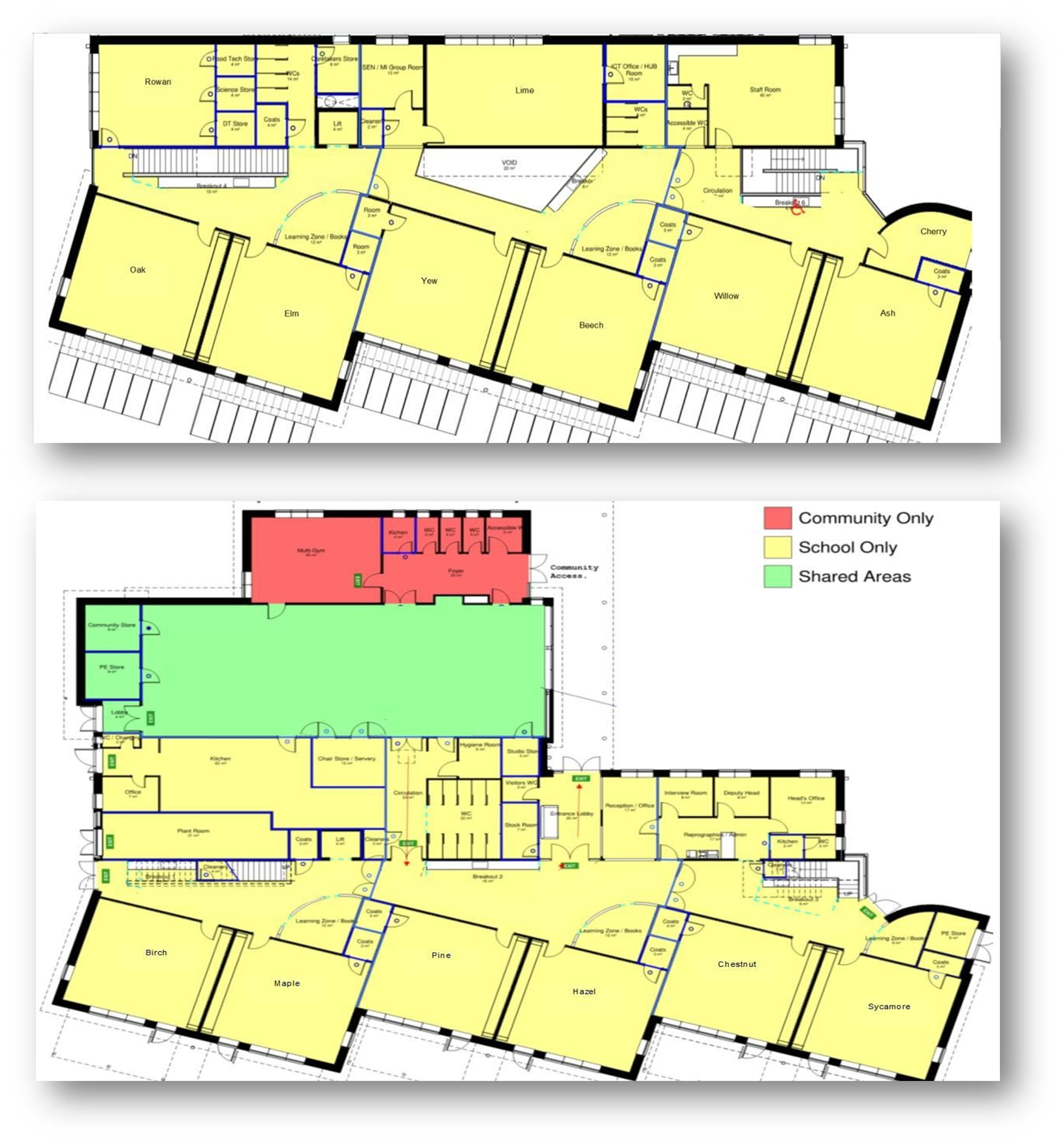
2.1.2 The Academy is committed to making reasonable adjustments to allow disabled pupils to access educational provision at the Academy.
2.1.3 We plan, over time, to increase the accessibility of provision for all pupils, staff and visitors to the Academy in the following areas:
· increase the extent to which disabled pupils can participate in the Academy curriculum
· improve the physical environment of the Academy to increase access to education by disabled pupils
· improve the delivery of information to pupils, staff, parents and visitors with disabilities.
2.1.4 Attached are three action plans relating to the above. These will be reviewed as and when necessary. It is acknowledged that there will be need for ongoing awareness training for all staff in the matter of disability discrimination and the potential need to inform attitudes on this matter.
2.1.5 The Accessibility Plan should be read in conjunction with the following policies, strategies and documents:
· Academy prospectus
· Disability equality scheme
· Equality, diversity and inclusion information and objectives statement
· Health and safety policy
· SEND Policy and Information Report
· Medical Policy
2.1.6 The Plan will be monitored by the Academy Council. There will be a full review of the Plan in September 2029, when a new Plan will be produced to cover the next three years.
2.2 Welcoming and preparing for disabled pupils
2.2.1 Where it is practicable to make reasonable adjustments to enable a prospective pupil to take up a place at the Academy and to satisfy the current admissions criteria, the Academy is committed to providing those reasonable adjustments.
2.2.2 To meet the needs of disabled pupils, the Academy requires full information. The Academy will ask prospective pupils to disclose whether they have received any learning support, have had an educational psychologist’s report or have any disability or other condition of which the Academy should be aware. Where a pupil has an Education, Health and Care (EHC) plan the Academy will work with the Local Authority (LA) which makes and maintains the EHC plan to ensure that the identified provision is delivered appropriately.
2.2.3 In assessing the pupil or prospective pupil, the Academy may need to take advice and require assessments as appropriate. The Academy will be sensitive to any issues of confidentiality.
2.3 Developing this Accessibility Plan
This Accessibility Plan has been informed by a review of the academy’s current accessibility arrangements, information and data, previous Accessibility Plan actions, and stakeholder views where appropriate. The academy may use the Accessibility Review Checklist (Appendix B) to support this process.
2.4 Participation and Engagement
The Academy recognises the importance of meaningful participation in accessibility planning. The identification of priorities and review of progress may be informed by the views and experiences of pupils, parents/carers, staff, governors and, where appropriate, external professionals. Consideration should be given to the voices of disabled pupils and their families.
| Vision and values: the purpose and direction of the academy’s plan
o At Wicklea Academy, we believe that every child has the right to learn, participate, achieve and belong. Our vision is to create an inclusive environment where all pupils, regardless of their abilities, needs or disabilities, can access education, school facilities, the curriculum and wider opportunities. We are committed to removing barriers, promoting independence and ensuring that every child feels valued, respected and supported to reach their full potential. o Our Accessibility Plan provides a clear framework for improving access to education for all members of our school community. |
| Gathering views: the views of those consulted during the development of the plan – key findings from gathering views of pupils, parents, academy staff and those working with the school
Information has been gathered through the annual review process, pupil conferencing and school ambassadors completing Health and Safety walks. |
| Information and data: pupil data and school audit – key findings from gathering information and data
The school’s pupil participation tracker has been used to inform our priorities and objectives. |
1.1 Monitoring and Review
Progress against the actions identified within this plan will be reviewed annually by academy leaders and reported to the Academy Council. The findings of this review will inform updates to the plan and future accessibility priorities. A full review and renewal of the plan will take place every three years.
3. Assessing accessibility and identifying priorities: [completed by the Academy with the support of Appendices]
4. Increasing the extent to which disabled pupils can participate in the Academy curriculum
| Priority/ Objective | Evidence Informing Priority | Actions | Outcome/ Success Measure | Timescale | Review of Progress | |
| Short Term | Ensure all staff are aware of curriculum needs for children with a disability – particularly any child who joins us in Year 3. | SEND Inclusion Advisor, during meetings with both settings, identified that more time needs to be given to enhance transition protocols from the infant school. | Continue to improve shared information system, including with St Annes Infants. Learning passports and support plans for children with SEND to be updated by staff when new information is received and three times yearly.
Consult with the relevant support teams to ensure children disabilities are able to fully access the curriculum. |
All staff working are aware of curriculum access needs and read and update new information on Learning Passports and within learning support plans regarding diagnosis, barriers to learning, professionals involved, strategy advice and pupil and parental views when received.
Learning passports and support plans to be living documents which are always ready to share, especially at three yearly parent meetings and at times of transition to new class or school. |
Ongoing | |
| Medium Term | Ensure learning environments maximise extent to which children access the curriculum. | In school monitoring and pupil conferencing. | Review with children the effectiveness of interactive whiteboard in teaching.
Include the use of flipcharts and working walls into regular teaching, ensuring the correct coloured pens are used. Review of light conditions in classrooms to include audit of blinds. |
All Interactive Whiteboards will be seen clearly by children.
Design of presentations/lessons will take into account the needs of all learners. All working walls can be clearly seen by children with work on them clearly presented and accessible for all. |
Ongoing | |
| Long Term | Ensure all teachers have undertaken neurodiversity and accessibility training. | Regular CPD has helped to identify any gaps in training. | All staff to attend planned training. | All staff work from a neurodiversity and accessibility perspective with inclusive learning throughout the school. | Ongoing |
5. Improving the physical environment of the school to increase access to education for disabled pupils
| Priority / Objective | Evidence Informing priority | Actions | Outcome / Success Measure | Timescale | Review of Progress | |
| Short Term | Ensure all members of the community can access the school building. | Regular site maintenance program and health and safety walks. | Ensure signage is clearly visible both at ground level and eye level.
Hearing loop signage to be visible in reception area. |
All members of the school community and new visitors will be able to access the school grounds easily, will know where the reception area is and will be able to communicate with staff in the reception area. | September 2027 | |
| Ensure school is suitable environment for children with a visual impairment. | Regular site maintenance program and health and safety walks. | Work with the visual support team to ensure all necessary adaptations are made.
Share these with the rest of the school – children and staff. |
Children and visitors with a visual impairment can easily navigate the school building safely. | September 2027 | ||
| Medium Term | Ensure all pupils can take part in every P.E. lesson. | Adapted PE curriculum and internal monitoring.
Working with Bristol Sport Foundation and external providers. |
Adapt lessons for pupils with SEND to ensure participation and enjoyment.
SENDCo to find out about agencies who can offer advice. Use opportunities where children with SEND are taking part in sporting activities out of school– ask them to teach the rest of the class. Look into a PE curriculum that supports the needs of all learners. |
All children with SEND will be observed in P.E. lessons as having access to all learning opportunities and making good progress. | Ongoing – adjusted to the needs of the children | |
| Long Term | External doors to be fully accessible to wheelchair users. | Health and safety walks and SLT wider thinking to future proof the school building. | External audit to advise and quote on any necessary changes. | Downstairs classrooms to be fully accessible for wheelchair users. | September 2028 |
6. Improving the delivery of information to disabled pupils
| Objective/ Priority | Evidence Informing Priority | Actions | Outcome/ Success Measure | Timescale | Review of Progress | |
| Short Term | All members of the community know about Bristol’s local offer and how to access support through this service. | Parent surveys and SEND coffee mornings. | Information in Newsletter/Notice board
Cards and fliers to be distributed via email. SENDCo and Family Link Worker to signpost, including the website. |
All members of the school community will know how to access information through the Bristol City Council website. | Ongoing | |
| Ensure availability of written materials in alternative formats, when necessary. | Changing demographics of the school community and breadth of languages and ethnic groups. | Become aware of services available of converting written information into alternative formats. | When needed, school will provide information in alternative formats.
Parents are aware of the translation services available through Class Dojo and the website. Class Dojo to translate posts into home language. |
September 2027 | ||
| Medium Term | Teaching staff will feel confident about ways of improving access to written information for pupils with SEND/EAL | Changing demographics of the school community, breadth of languages and individual family needs. | Develop a bank of resources to support staff in matching appropriately the level of written information for pupils with SEND.
Ensure that all staff know how to access the link speech and language therapist for advice about communication strategies. Ensure all staff know how to access support from the Bristol Autism Team for advice about communication strategies. Provide translations of information/ learning for EAL families. |
All children with SEND/EAL will be observed in class as having access to all learning opportunities with appropriate adaptation of written language for their needs ensuring appropriate levels of challenge and support.
EAL families are able to access information communicated by school. |
September 2027 | |
| Long Term | Develop use of ICT to maximise the opportunities to share school information with all parents/carers. | Advise from external support providers and internal IT department. | Rolling program of updating IT provision across the school. | All children with disabilities readily have access to IT resources. | September 2029 |